Does This Move the Boat?
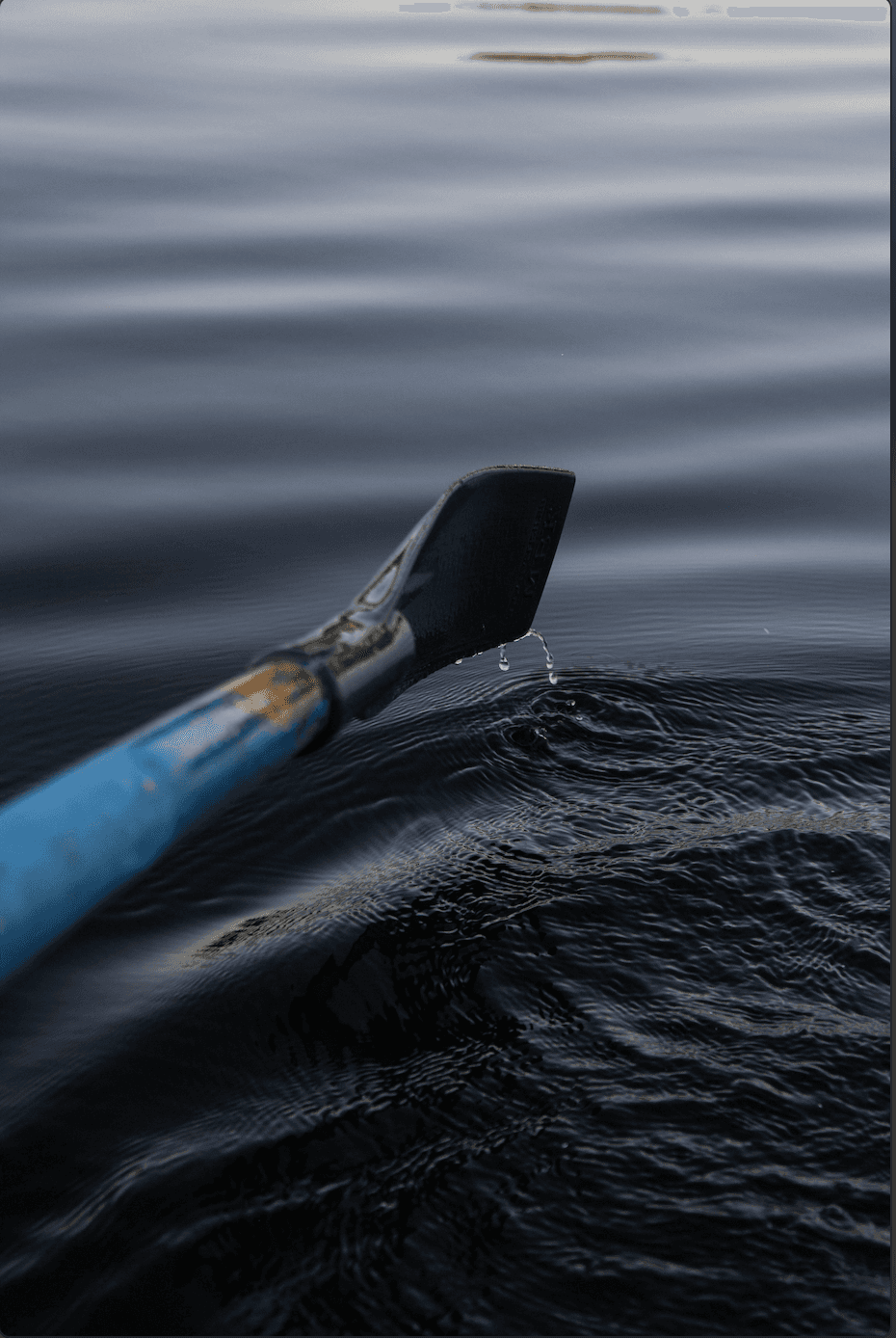
Being right is not the goal. Velocity towards it is.
Life rarely rewards perfect compliance. It rewards useful creation.
Success does not come from doing things right, following the rules, completing the checklist, being responsible, being prepared. Those things matter. But they are rarely what moves the needle.
Imagine you are sailing across an ocean. You know where you are. You know where you want to go. You set your course. From there, almost everything comes down to direction and speed. Velocity.
Yet many of us spend our lives polishing the boat. Adjusting the ropes. Reorganising the storage compartments. Making spreadsheets about sailing, talking about sailing, reading about sailing, preparing to sail.
The details feel productive because they are tangible. Easy to measure, easy to explain, easy to check off. But the ocean does not care how organised your checklist is.
I learnt this early in life. I was competing horses on the national team and I wanted time with the people around me, and so I only had a few hours a week for school. I still wanted top grades. There was no time to do school “properly.” Only time to aim. So I learned to keep my eyes on the target and spend my scarce hours on what actually changed the outcome.
Years later, with far more time, I expected to do better. I had nicer notes. More checklists. I spent more hours. My grades were the same, and I had not learned more. I had simply been polishing the boat.
I have seen the same pattern in every demanding environment since. In the emergency room, there is no spare attention for blame or excuses, only the next decision that serves the patient. The constraint forces clarity and velocity.
We spend enormous energy explaining why we did not move forward. The train was late. Someone else did not deliver. The circumstances were not perfect. I needed a little more time. Someone else took my time. Perhaps all of it is true. But none of it changes the direction of the boat.
So one question has become central for me: What choice serves my purpose?
Not what looks productive. Not what makes me appear responsible. Not what wins approval. Not what lets me tick another box. What actually serves the direction I have chosen?
The answer is often surprisingly simple. Sometimes it is sacrifice. Sometimes it is publishing the imperfect. Sometimes it is resting, because exhaustion has become the thing slowing the boat or pulling it in the wrong direction. The task itself is not what matters. The direction determines the value of the task.
And sometimes washing the boat is exactly right. Maintenance matters. Team spirit matters. A healthy foundation matters, but only when those things ultimately help the boat move.
In medical school I learned a principle that neuroscience states plainly: neurons that fire together wire together. The brain strengthens whatever it repeats. Attention spent on the next action that serves your purpose builds one set of pathways. Attention spent on obstacles, blame, and comparison builds another. Attention is not passive — it is the energy that shapes what we become. Where it goes repeatedly, life tends to follow.
The great contemplative traditions arrive at the same place from a different direction: strip away the noise, return to what matters, stop leaking energy in a thousand directions. Channel it. Again and again.
The people who create extraordinary things are rarely the ones with the most perfect checklist, or the ones who are technically “right.” More often they are the ones who have learned to remove everything that does not serve the direction they have chosen.
So whenever there is noise, ground yourself and return to the question: Does this serve your purpose?
If yes, cultivate momentum. If no, let it go.